Walk into almost any dental back office and you’ll find the same bottleneck: a stack of scanned paper. Explanation-of-benefits statements, insurance checks, denial letters, payer correspondence — documents that arrive on paper or as PDFs and have to become actions inside the practice management system. Today, for most practices, that translation happens slowly, expensively, and somewhere else. Dental payment posting automation means those documents are read, reconciled, and posted in-house, the same day they’re scanned — instead of being batched out to a third party and keyed in days later.
The way it works today
The typical flow: the front office scans the day’s mail, batches it, and sends it to a third-party posting company. That vendor’s staff key the data into the PMS — posting payments, applying adjustments, moving balances to patient responsibility — and send back a confirmation, sometimes days later. The paper, and the patient financial data on it, has left the building. Every step of that flow leaks something:
- Time. Manual posting queues commonly run days behind, and the work itself is slow — industry analysis puts a straightforward remittance at 3–5 minutes of skilled keying and a complex one (coordination of benefits, partial denials) at 8–12 minutes, after it reaches the front of the queue.
- Money. Manual posting costs real labor per claim, and the third-party model adds a vendor margin on top of work that is mostly transcription.
- Accuracy. Manual keying is a known error class — misread amounts, wrong adjustment codes, payments applied to the wrong patient — and every error becomes a distorted ledger or a patient billing complaint later.
- The appeal window. The costly one. A denial sitting in a scan-and-send queue is a denial nobody is appealing yet, while the payer’s window (typically 30–180 days) burns down. Days lost to posting latency are days lost off every appeal in the pile.
- Visibility. The patient and payment information on those documents travels to an outside vendor, and the decisions made on your revenue happen where you can’t see them.
For a single practice it’s a nuisance. For a group running it across dozens of locations, it’s a structural liability — slower cash cycles, delayed insight, and a correction backlog that never quite clears. It’s one of the biggest single contributors to the revenue leak hiding under a healthy collections number.
What the Document Center does instead
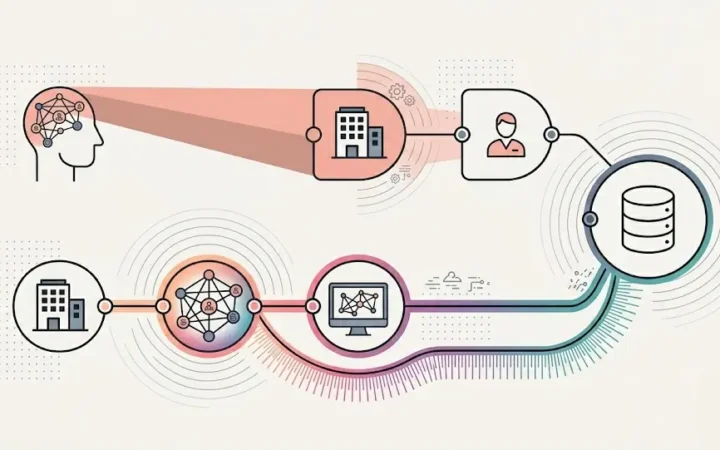
ELVA’s Document Center collapses that multi-day, multi-party process into one in-house step: staff scan the document where they already work; ELVA reads it, understands it, and takes the proper action inside the PMS — same day, inside your walls, with a complete record of what it did and why. It works in three moves:
- Read. The document is parsed with enterprise-grade OCR and layout understanding — not just “what text is on the page” but what this document is and what it means: an EOB, a check, a denial letter, a request for additional information. Amounts, adjustment codes, claim references, and patient identifiers are extracted and matched back to the right claim and ledger.
- Decide. This is where it differs from a scanner with OCR bolted on: it reconciles. It checks the payment against what the claim should have paid, distinguishes a clean payment from a short-pay, recognizes a denial and its reason, and identifies what each document actually requires. When something is ambiguous, it routes the item to a person with the context attached, instead of guessing — the same honesty-about-uncertainty discipline as the rest of the ELVA engine.
- Act. A clean EOB or check is posted to the PMS — payment applied, contractual adjustment mapped, patient balance moved — with a reconciliation trail tying remittance to ledger to deposit. An underpayment is flagged the moment it’s read, the gap quantified, and the appeal drafted. A denial surfaces to the denials worklist on day zero with the reason and recommended next step. Anything needing a human decision is routed with full context, not dropped into an undifferentiated pile.
Why this matters more for a DSO
The third-party posting model was a reasonable answer to a real problem: posting is tedious, expert work that most front offices don’t have uninterrupted time to do well. But it solved the labor problem by exporting the latency, the cost, and the visibility. The Document Center solves the labor problem without those trade-offs — the work happens immediately, where the patient is, under your own audit trail in accounts receivable, and at software cost instead of vendor cost. Across a group, that’s the difference between cash that posts the day it arrives and cash that posts whenever the queue clears.
The simplest way to see it: today, a scanned underpayment might take a week to reach a vendor, get posted, get noticed, and get appealed — if it gets noticed at all. With the Document Center, it’s read, flagged, and has a draft appeal attached the same day it’s scanned. That compression — days to same-day, outside-the-walls to inside, “hopefully someone catches it” to “the system caught it” — is the entire point. And because posting is where remittance data enters the system, doing it in-house and same-day is also what makes the rest of an automated claims operation trustworthy: everything downstream is only as current as the posting queue.
Frequently Asked Questions
What is dental payment posting automation?
Software reading remittance documents — EOBs, checks, denial letters — extracting the amounts, adjustment codes, and claim references, reconciling them against what each claim should have paid, and posting the results to the practice management system the same day, in-house, instead of batching documents to a third-party keying service.
How long does manual EOB posting actually take?
Industry analysis puts a straightforward remittance at 3–5 minutes of skilled manual work and a complex item — coordination of benefits, partial denials — at 8–12 minutes, after it reaches the front of the queue. At a few hundred claims a month, posting alone consumes dozens of staff hours.
What’s wrong with outsourcing payment posting?
It trades a labor problem for latency, cost, and visibility problems: documents and patient financial data leave your walls, a vendor margin sits on top of transcription work, the posting queue adds days to every appeal clock, and the decisions made on your revenue happen where you can’t audit them.
How does same-day posting protect the appeal window?
A denial can’t be appealed until someone reads it. When remittances post the day they arrive, denials surface on day zero with the reason attached — instead of sitting unread in a queue while the payer’s 30–180-day appeal window burns down.
What happens when a document is ambiguous?
It gets routed to a person with full context attached rather than guessed at. The Document Center posts what it can verify, flags what it can’t, and never trades accuracy for throughput — the same abstain-rather-than-guess discipline as the rest of ELVA’s RCM engine.
Keep the posting — and the data — inside your walls. See ELVA Insurance, or where the leak this fixes actually hides: dental revenue leakage.