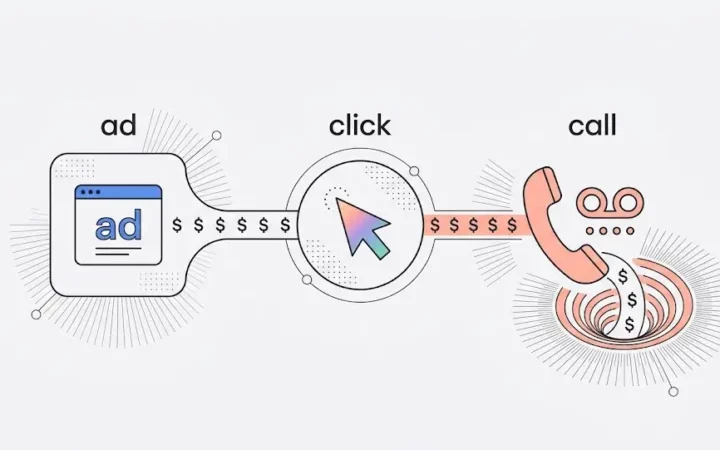
Here’s the uncomfortable arithmetic of a dental front desk: the phone is the single biggest revenue channel in the practice, and it’s also the one most likely to be ignored — not from negligence, but from physics. One receptionist can hold one conversation at a time. While they’re checking a patient in, verifying insurance, or taking the call already in progress, every other caller hears ringing, then voicemail. And missed calls in a dental practice don’t wait politely — most callers who reach voicemail simply hang up and dial the next practice on their search results.
The numbers are worse than most owners think, partly because the lost calls are invisible: they never appear in the schedule, so the practice never sees what it didn’t catch.
The math owners never run
Industry estimates vary by study, but they cluster in the same uncomfortable place: the average dental practice misses somewhere around a third of its incoming calls — figures across sources run from roughly 15% to 40%, climbing past 50% during lunch and Monday-morning peaks. And the leak doesn’t end at the missed ring: by industry reporting, around 78% of callers who hit voicemail never leave a message. They don’t wait for a callback. They call the next office.
Now attach a value. A new dental patient is commonly put at roughly $850 in first-year revenue, and several thousand dollars — often $4,500 to $22,000 — across the lifetime of the relationship. A practice taking 40 calls a day and missing a third isn’t losing a few phone calls; it’s losing new-patient relationships worth five and six figures a year, quietly, to whoever picked up. The lost call is the cheapest patient you’ll never acquire — already interested, already dialing, already gone.
Why “answer the phone better” isn’t the fix
The instinct is to tell the front desk to try harder, or to hire another body. But this isn’t a training or effort problem — it’s a concurrency problem. A human can answer one line; the second simultaneous caller is unreachable by definition, no matter how good the receptionist is. And hiring for peak call volume means overstaffing for the other twenty hours. The phone’s busiest moments are exactly when the desk is also busiest with the patients standing in front of it — the two demands peak together, and the person loses every time.
What actually closes the gap is answering every call at once — which is a capability, not an effort. ELVA’s AI Receptionist picks up every call instantly, in parallel, around the clock, and carries it all the way to a booked appointment in the practice’s schedule: it checks real availability, matches the visit type, and writes the booking back to the practice management system. The fifth simultaneous caller at 11am gets the same instant answer as the first. This is the same logic behind scaling a front desk without scaling its headcount — the AI absorbs the volume the phone lines physically can’t hand to one person, so the team spends its attention on the patients in the building instead of the queue.
The invisible loss becomes a visible number
The quiet part of the missed-call problem is that you can’t manage what you can’t see — a missed call leaves no trace in the schedule. Once every call is answered and every booking recorded, the channel stops being a black box: the practice can finally see how many calls came in, how many booked, and what the ones that didn’t were asking for. The first time an owner sees the real call volume their old setup was dropping, the cost stops being abstract. The phone you couldn’t measure becomes the channel you can — and the patients who were booking somewhere else start booking with you.
The economics extend in two directions worth their own reading: what happens to the calls that arrive after you’ve closed for the day, and what missed calls do to the marketing dollars you already spent to make the phone ring. See how the phone gets answered on the ELVA AI Receptionist page.
Frequently Asked Questions
How many calls does the average dental practice miss?
Estimates vary by study, but cluster around a third of incoming calls — sources range from roughly 15% to 40%, rising past 50% during lunch hours and busy mornings. Because missed calls never enter the schedule, most practices significantly underestimate their own rate until they start measuring it.
What does a missed call actually cost a dental practice?
More than the call. A new patient is commonly valued near $850 in first-year revenue and several thousand dollars over the relationship’s lifetime. Combined with the finding that roughly 78% of voicemail-bound callers never leave a message — they call a competitor instead — a single missed new-patient call can represent a lost long-term relationship, not just one appointment.
Why can’t hiring more front desk staff solve missed calls?
Because it’s a concurrency problem, not an effort one. One person answers one line; simultaneous callers are unreachable no matter how skilled the staff. And call volume peaks exactly when the desk is busiest with in-office patients, so the phone loses precisely when it matters most. Answering every call at once is a capability, not a matter of trying harder.
Does an AI receptionist actually book the appointment, or just take a message?
It books. ELVA answers in real time, checks live availability, matches the visit type, and writes the appointment into the practice management system within the conversation — for new and returning patients alike. The caller gets a scheduled visit, not a promise of a callback.
How do I find out how many calls my practice is really missing?
Measure them. Once every call is answered and recorded, call volume, booking rate, and the reasons behind unbooked calls become visible for the first time. Most owners are surprised by the real number — which is the point: the missed-call problem is invisible until the calls stop being missed.
Stop losing patients to a ringtone. See the ELVA AI Receptionist, or run the after-hours half of the math: who answers when you’ve closed.